Buying a home in South Windsor can feel exciting right up until the inspection period starts. Suddenly, you are thinking about roofs, basements, heating systems, radon, wells, and septic records instead of paint colors and furniture placement. The good news is that a home inspection is there to help you make a clearer, more informed decision before closing. If you know what to expect, the process feels far less stressful. Let’s dive in.
What a home inspection covers in Connecticut
In Connecticut, a home inspection is a licensed, largely visual review of a home’s major systems and readily accessible areas. It is not a warranty, a guarantee, or a code certification. Instead, it gives you a practical snapshot of the home’s visible condition at the time of the inspection.
Licensed Connecticut home inspectors are authorized to examine and report on major components of a residential building. That can include the heating and cooling systems, plumbing, electrical, foundation, roof, masonry, structure, and interior and exterior components. For buyers in South Windsor, this report often becomes one of the most important tools for understanding repair needs before moving forward.
How the inspection timeline usually works
Connecticut does not require buyers to get a home inspection, and sellers are not required to allow one. That means the inspection period is usually negotiated in the contract. If you want time for a general inspection and any specialized follow-up tests, that access and timing should be addressed early.
Once your offer is accepted, the clock typically starts moving fast. You will want to schedule the general inspection right away, especially if the home may need extra review for radon, septic, well records, or other concerns. A short delay can make it harder to complete everything before your contingency deadline.
Why access matters during the inspection
Connecticut regulations limit inspectors to readily accessible areas. In plain terms, that means they are not moving heavy personal property, opening sealed surfaces, or doing destructive testing. They are inspecting what they can reasonably reach and see.
That matters because blocked access can affect the final report. If the attic hatch is obstructed, the electrical panel is hard to reach, or storage fills a crawlspace, the inspector may note those limitations. For buyers, that can leave open questions you may need to follow up on later.
What South Windsor buyers should pay close attention to
South Windsor has a meaningful share of older homes and a housing mix shaped by several decades of construction. Town planning documents summarizing ACS data show large portions of housing were built in the 1950s through the 1980s, including 25.5% from 1980 to 1989, 16.2% from 1960 to 1969, 13.4% from 1970 to 1979, 12.9% from 1950 to 1959, and 5.8% in 1939 or earlier.
Because of that age mix, many inspections in South Windsor focus less on cosmetic details and more on core systems and long-term maintenance items. You can expect extra attention on the roof, heating and cooling equipment, plumbing, electrical, insulation, windows, basements, and signs of moisture intrusion. These are often the areas where age and deferred maintenance show up first.
Roof, attic, and exterior wear
Older and mid-life roofs often raise questions about remaining life, flashing, ventilation, and visible wear. An inspector may also look for drainage issues around the house and signs that water is not moving away from the foundation properly. Even small exterior issues can connect to larger moisture problems later.
Basement and moisture concerns
In South Windsor, basements are often a big part of the inspection conversation. Inspectors may note staining, dampness, cracks, musty odors, or other visible indicators of moisture intrusion. A basement does not need to be perfect to be workable, but you want to understand what is cosmetic and what could point to a larger repair budget.
Heating, cooling, plumbing, and electrical
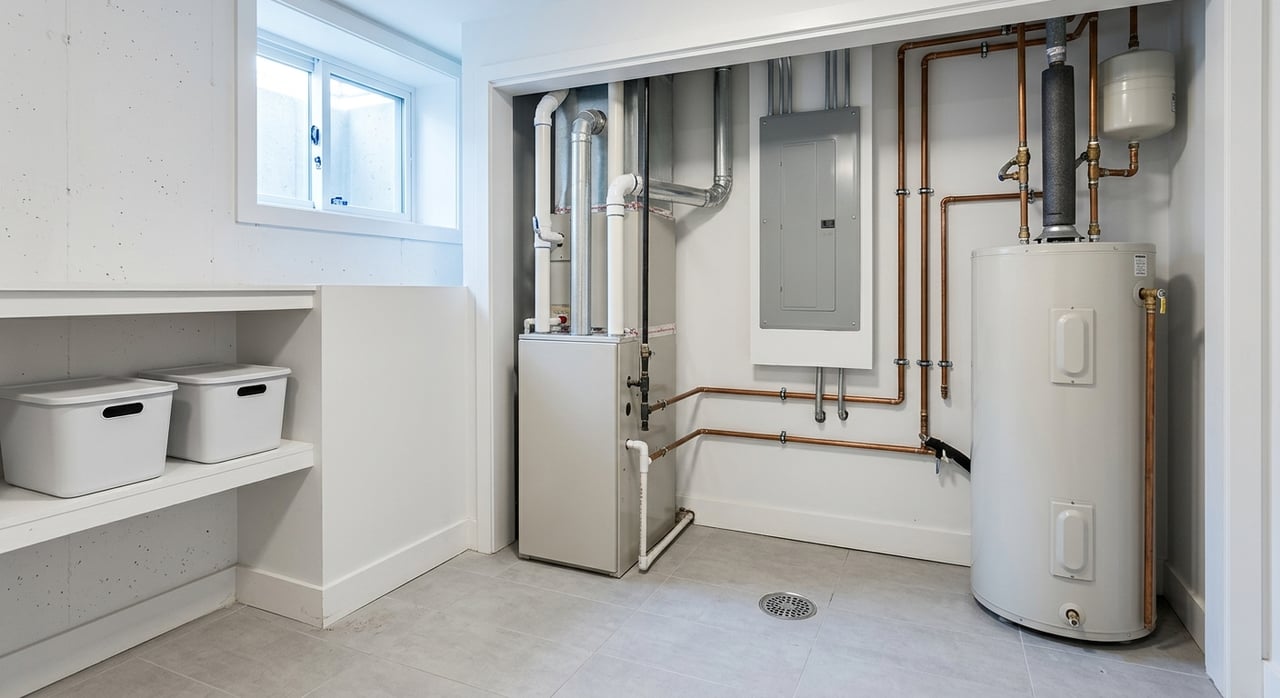
Systems that have been in place for many years often need a closer look. The inspector will typically review visible components of the HVAC, plumbing, and electrical systems and note signs of age, wear, or functional concerns. For buyers, this helps you estimate whether you are stepping into routine maintenance or a near-term replacement cycle.
Septic and well issues can require extra steps
One of the most important local factors in South Windsor is that many homes rely on on-site sewage disposal systems. The South Windsor Health Department handles septic permits, repairs, soil evaluations, and related records. It also maintains well-drilling permits, completion reports, and well-water test results, though it does not perform water testing itself.
If the home you are buying has septic or a private well, expect the possibility of add-on inspections, testing, or records review beyond the general home inspection. These items are not automatic, and sellers are not required by Connecticut law to allow every requested specialized inspection. That is why it helps to identify these needs quickly and schedule them as soon as the contract is accepted.
Radon testing is often worth considering
Radon is a normal concern in Connecticut, not a rare one. The Connecticut Department of Public Health says elevated radon can occur in all parts of the state, and the only way to know a home’s level is to test. The EPA action level is 4 pCi/L.
Short-term radon tests usually take 2 to 7 days, and the state notes they are often best done in colder months when the home is closed up. If you are buying in South Windsor, it is smart to think about radon early in the inspection period so you have enough time for results and next steps if needed.
Older homes may need lead follow-up
If the home was built before 1978, lead-based paint may be another issue to review. Connecticut public health guidance notes that homes built before 1978 may contain lead-based paint. Buyers of most pre-1978 housing must also receive lead-disclosure information before becoming obligated and have the opportunity for an independent lead inspection.
That does not mean every older home has a current lead hazard problem. It does mean you should understand the age of the home, review the required disclosure information carefully, and decide whether additional evaluation makes sense during your inspection window.
Seller disclosures help, but they do not replace an inspection
Connecticut points buyers and sellers to the Residential Property Condition Report and, in some cases, a separate Residential Foundation Condition Report effective July 1, 2025. These forms can be helpful because they highlight issues that may deserve closer review. They can also point you toward questions to ask before spending money on inspections.
Still, the state form makes clear that seller statements are not a warranty. In real life, that means disclosures are best used as a screening tool, not as a substitute for your own due diligence. A solid inspection report gives you a more complete picture of the home’s current visible condition.
Permit history can matter more than buyers expect
Sometimes an inspection reveals a finished basement, addition, deck, or other alteration that raises questions about permits or certificates of occupancy. Connecticut’s property condition form tells buyers to consult the municipal building official when they need to confirm permit history or approvals. This can be especially important when visible improvements and available records do not seem to match.
For South Windsor buyers, this step can protect you from surprises after closing. If the home includes altered or expanded space, it is worth confirming what was properly permitted and approved.
What happens after the inspection report
Once the report is delivered, you will usually need to sort findings into a few categories. Some items are routine maintenance. Some are aging components you can budget for over time. Others may be material issues that affect safety, function, or your near-term repair costs.
The strongest response is often a focused list of the most important concerns. In South Windsor, that may include structural issues, active moisture intrusion, HVAC or electrical failures, septic or well concerns, radon results, or lead-related issues in older homes. Keeping the list practical helps you negotiate more effectively.
How inspection findings affect negotiations
Connecticut consumer guidance notes that if expensive defects are found, buyers may be able to negotiate repairs or a price reduction. This is where the inspection shifts from information gathering to decision making. You are no longer asking whether a home is perfect. You are deciding whether the condition matches the price and your comfort level.
In many cases, buyers move forward after getting clarity on repair costs and deciding which items matter most. In other cases, the inspection reveals more risk than expected. Either way, the goal is the same: understand the home well enough to make a confident choice before your contingency deadline passes.
Do not forget the final walk-through
The final walk-through is your last chance before closing to confirm the property is still in the agreed condition. It is also the time to check that any promised repairs were completed. If inspection-related work was part of the agreement, this step matters.
A walk-through is not the same as a full inspection, but it is an important final check. It helps make sure there are no last-minute surprises between negotiation and closing day.
The big takeaway for South Windsor buyers
A home inspection in South Windsor is usually less about finding a flawless house and more about understanding condition, maintenance, and hidden risk before you buy. With the town’s mix of older homes and the possibility of septic, private well, radon, or lead follow-up, local context matters. The more prepared you are during the inspection window, the stronger your position will be.
When you have the right guidance, the inspection phase becomes a decision-making tool instead of a source of confusion. That can make a big difference in how confidently you move from accepted offer to closing.
If you are preparing to buy in South Windsor and want a clear plan for inspections, timing, and next steps, James Knurek can help you navigate the process with local insight and steady guidance.
FAQs
What does a home inspection include in South Windsor, CT?
- A Connecticut home inspection is a licensed, largely visual review of major systems and readily accessible areas, including items like the roof, foundation, plumbing, electrical, heating, cooling, and interior and exterior components.
Are home inspections required for South Windsor home purchases?
- No. Connecticut does not require buyers to obtain a home inspection, and sellers are not required to allow one, so the inspection period and access are usually negotiated in the contract.
Should you test radon during a South Windsor home inspection?
- Radon testing is often worth considering because Connecticut public health guidance says elevated radon can occur in all parts of the state, and the only way to know a home’s radon level is to test.
Do South Windsor homes need septic or well inspections?
- Some do. Many South Windsor homes rely on on-site sewage disposal systems, and some have private wells, so buyers may need separate testing or records review beyond the general home inspection.
Can a South Windsor seller refuse specialized inspections?
- Yes. Connecticut law does not require sellers to allow every requested general or specialized inspection, which is why buyers should negotiate enough time and access up front.
What should you ask for after a South Windsor inspection report?
- Buyers often focus on a short list of material issues such as structural concerns, moisture intrusion, major system failures, septic or well problems, radon, or lead-related concerns in older homes.
Do seller disclosures replace a home inspection in Connecticut?
- No. Connecticut’s property condition forms can help identify issues to review, but seller statements are not a warranty and should not replace an independent inspection.
Why does permit history matter for South Windsor homes?
- If an inspection reveals additions or finished space, buyers may want to confirm permits and certificates of occupancy with the municipal building official to make sure visible improvements match the record history.